Vintage Flower Affinity Brush Stamps
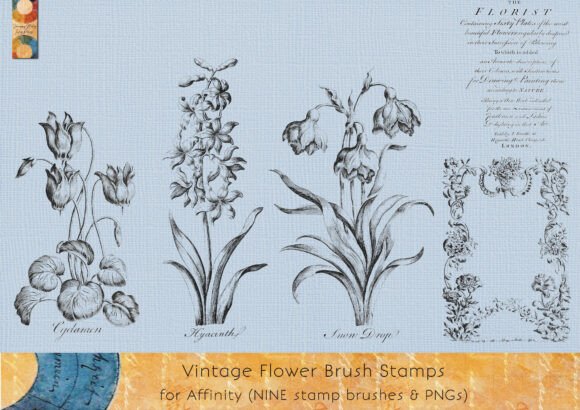
The Vintage Flower Affinity Brush Stamps offer a unique blend of historical charm and modern digital flexibility. These brush stamps are derived from original flower-drawing book illustrations dating back to 1760, reimagined for use in Affinity Photo and Affinity Designer. Each stamp retains the delicate line work, botanical accuracy, and ornamental flourishes characteristic of the era, making them ideal for projects that call for a timeless, handcrafted aesthetic.
What sets these stamps apart is their dual availability: they come as both .afbrushes files for direct use in Affinity’s Pixel Persona and as transparent .png images. This versatility allows designers to integrate the motifs seamlessly into both digital and print work, whether for layering, masking, or traditional illustration. The clean edges and transparent backgrounds of the PNGs make them especially useful for crafting intricate compositions without the need for complex clipping paths.
Design Personality and Visual Appeal
The Vintage Flower Affinity Brush Stamps carry a distinctly elegant and organic personality. Their historical roots give them a sense of authenticity and narrative depth, while their crisp digital rendering ensures they remain usable across modern design contexts. The botanical illustrations range from simple outlines to more elaborate, detailed blooms, offering a spectrum of visual complexity to suit different design needs.
These stamps work particularly well in projects that benefit from a touch of vintage elegance—think editorial layouts, packaging design, wedding stationery, and artisan branding. Their hand-drawn quality makes them a strong choice for creative professionals looking to add a human, tactile feel to their work. Unlike mass-produced vector graphics, these stamps carry the nuance and imperfection of historical artistry, giving them a warmth that resonates with audiences on an emotional level.
Applications Across Creative and Commercial Projects
Designers, marketers, and small business owners can find multiple uses for these stamps. In brand identity work, they serve as subtle background elements or focal points in logo design. For packaging design, especially in niche markets like botanical products, teas, or natural skincare lines, they provide a sense of heritage and craftsmanship. In editorial design, these stamps can be used to create ornamental dividers, drop caps, or marginalia that enhance the reading experience without overpowering the content.
For digital creators, the transparent PNGs open up possibilities in social media graphics, digital scrapbooking, and layered illustrations for web banners or blog headers. The ability to mask and blend these elements digitally allows for creative experimentation without requiring advanced illustration skills. Entrepreneurs launching lifestyle or wellness brands can use these motifs to create a consistent visual language across both print and digital marketing materials.
Enhancing Visual Hierarchy and Brand Perception
When used thoughtfully, the Vintage Flower Affinity Brush Stamps can elevate the visual hierarchy of a design. Their intricate details naturally draw the eye, making them effective for guiding attention in editorial spreads or packaging labels. In branding contexts, consistent use of these motifs across different touchpoints—such as business cards, product packaging, and website graphics—can reinforce brand recognition and lend a sense of professionalism.
Because they are rooted in historical design, these stamps also carry a subtle connotation of trust and tradition. This can be especially valuable for brands that want to communicate authenticity, craftsmanship, or heritage. However, it’s important to balance their ornamental nature with more minimalist design elements to avoid visual clutter. Using them as accents rather than dominant features often yields the best results.
Practical Tips for Using the Stamp Set
When incorporating these stamps into your work, start by evaluating the overall tone and purpose of your project. For print projects, test how the stamps interact with different paper textures and color palettes. For digital use, experiment with layer blending modes and opacity settings to create depth and dimensionality.
- Pairing with fonts: These stamps work well alongside serif and script typefaces that share a similar historical sensibility. However, they can also contrast beautifully with clean sans-serif fonts to create a balanced, modern-vintage hybrid style.
- Testing in context: Always preview the stamps at actual size and in the intended environment. A motif that looks elegant on screen may appear too delicate when printed or too bold in a small digital graphic.
- Licensing considerations: The set includes commercial use rights, but it’s always wise to double-check the licensing terms included in the PDF documentation to ensure compliance, especially when using the motifs in mass-produced goods.
Final Thoughts and Recommendations
The Vintage Flower Affinity Brush Stamps are more than just decorative assets—they are a bridge between historical artistry and contemporary design tools. Whether you're a professional designer looking for unique elements to enhance your client work or a small business owner aiming to create a cohesive brand aesthetic, these stamps offer both practical utility and emotional resonance.
For best results, treat them as design accents rather than primary visual elements. Use them to support your layout, not overwhelm it. And don’t be afraid to layer them with other textures or combine them with modern typography to create a compelling visual contrast. With the included PDF instructions and PNG flexibility, integrating these stamps into your workflow is straightforward, even if you're new to Affinity or digital illustration.
In a world where so much design feels mass-produced and algorithm-driven, the Vintage Flower Affinity Brush Stamps offer a refreshing return to craftsmanship and character. They’re a reminder that sometimes, the most powerful design elements are those that carry a story—and in this case, that story spans over 250 years.